
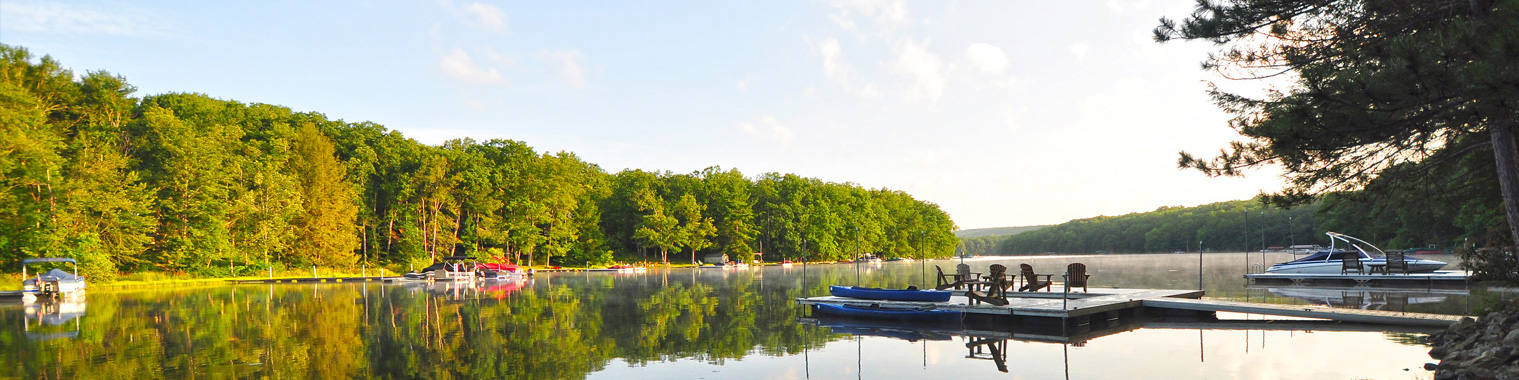
Garrett County Government Board of County Commissioners PUBLIC MEETING AGENDA
Monday, December 1, 2025
Agenda Session Times are Approximate
Meetings will also be Live Streamed at http://www.garrettcountymd.gov/live
The Board of County Commissioners may close a portion of this public meeting and move into Executive Session to comply with a specific constitutional, statutory, or judicial requirement that may prevent public disclosure about a particular proceeding or matter.
*To comment on agenda items – please send to @garrettcountymd.gov
3:00 Administrative Session
Appointments – Ruth Enlow Library – Two Members
Mr. Null will review a number of administrative and managerial matters under his authority and jurisdiction with the Board of County Commissioners
4:00 Call to Order of Public Session, Invocation, and Pledge of Allegiance
County Administrator – Additions/Deletions to Public Meeting Agenda
Approval of Public, Administrative, and Executive Meeting Minutes
4:05 Recognition for Years of Service: Chuck Nolan – House of Hope
4:10 Proclamation – Ruth Enlow Library of Garrett County – 75th Anniversary
4:15 2026 Legislative Requests – Senator Mike McKay and Delegate Jim Hinebaugh
4:30 Public Commentary
ANNOUNCEMENTS
ADJOURNMENT
Public issues or concerns that are to be presented to the Board of Garrett County Commissioners during any Public Meeting should be scheduled with Carol A. Riley–Alexander, Executive Assistant to the Board of County Commissioners/County Administrator.
The Board of Garrett County Commissioners’ next scheduled Public Meeting will be on Tuesday, December 16, 2025 at the Garrett County Courthouse beginning at 4:00 PM.
Thanksgiving Day Buffet at Stonecroft Manor
The Garrett County Chamber Of Commerce
Thanksgiving Buffet at Stonecroft Manor
Date: Thursday, November 27
Time: 11:00 AM – 7:00 PM
Location: Stonecroft Manor, Oakland, MD
Reservations: (240) 488-1104 | https://www.stonecroftmanor1868.com/thanksgiving-dinner
Celebrate Thanksgiving with the timeless charm of Stonecroft Manor. Guests are invited to enjoy a beautifully prepared buffet featuring carved herbed roasted turkey, maple-glazed ham with rum raisin sauce, braised beef short ribs, grilled salmon with herbed lemon butter, and roasted vegetable lasagna. Classic holiday sides and house-made desserts round out the feast, served in Stonecroft’s warmly lit dining rooms.
Pricing:
Adults – $35
Children (6+) – $15
Children 5 & under – Free
Seatings are available from 11 AM to 7 PM. Early reservations are recommended as space is limited.
Garrett County Chamber Of Commerce Upcoming Events
|
|||||||||||||||||||||||||||||||||||||||||||||||||||||||||||||||||||||||||||||||||||||||||||||||||||||||||||||||||||||||||||||||||||||||||||||||||
|






















Deep Creek Lake 100 Birthday Bash set for July 19
McHENRY — The public is invited to the Deep Creek Lake 100 Birthday Bash on Saturday, July 19 at the Garrett County Fairgrounds. Special events are planned all day from noon to 10 p.m. in celebration of both the 100-year legacy of Deep Creek Lake and the surrounding community.
A special admission fee of only 25 cents is planned for the birthday-themed fair-style event, making it affordable for everyone. Displays will educate about Deep Creek Lake history and there will be interactive demonstrations, giveaways, live entertainment featuring both local and national bands, a dedicated kids’ zone, various food, nonprofits and charities, and a Biergarten serving beer and wine.
Ending the day, for the first time ever in the area, Firefly will present a sky show, with 200 drones in the night sky creating animations, shapes and symbols representing Garrett County and set to music. Demonstrations will also be given during the day showing how the software works.
Musical entertainment will include The Remedy, Queen City Funk & Soul and the headliner Buckwild, planned for 6:30 p.m. in the Ag Heritage Hall.
Buckwild is a country cover band from Pittsburgh, Pa., with members from the The Hillbilly Way, Chris Higbee Project, Journey Through The Ages, and Whiskey High.
Buckwild’s song list is made up of today’s best country hits and a few well-known rock and metal anthems. Current songs on the charts include “100 Summer Nights” and “Wait in the Truck” featuring Amanda James.
Outside the gates, the Mountain Top Cruisers will present a centennial car show that is open to anyone. Inside, plans are to showcase a car from each decade over the last 100 years.
The DCL 100 float will be on display and set up for photo opportunities. The Maryland Natural Resources Police will have displays and demonstrations of their Underwater Operations Team and their Unmanned Aircraft System.
There will be Taekwondo demonstrations and safety awareness information from Red Beard Scuba & Recovery. Halian Landscaping will have a sand zone with diggers for kids, and fishing demonstrations will teach how to cast a line. Robotics demonstrations are also planned.
The Biergarten will be offered in the area where chicken dinners are normally served, with beer and wine available through the Lions Club and Lohr Distributors. HART for Animals will offer free wine glasses from past events, and the Oakland Rotary will give out stadium beer glasses for its 100th anniversary until they run out.
Food will be sold in the nonprofit booths and there will be dunk tanks.
In the Ag Hertiage Hall, historic displays will be presented, including 100 years of Deep Creek Lake photos.
Local towns will also be represented, as well as the Deep Creek Property Owner’s Association and the Deep Creek Watershed.
A display will also include Flying Scot #1 with its mast up and a Sears & Roebuck kit boat that has been in Garrett County for its entire life.
The Quonset huts will house nonprofits, charities, demonstrations and craft vendors.
Volunteers are still needed for the event. To inquire, contact Kitty at [email protected].
For complete information, visit DCL100.com.
Real Property Tax Rate to be Reduced
Real Property Tax Rate to be Reduced
The Garrett County Commissioners propose reducing the local Real Property Tax rate for the upcoming fiscal year, lowering it from $1.056 to $1.02 per $100 of assessed value.
In the wake of COVID-19 and the subsequent inflationary period, the county took a cautious stance, anticipating economic instability in both revenues and expenditures. While that approach helped maintain financial stability through the pandemic, Garrett County emerged from the economic challenges more favorably than expected.
The result is a stronger revenue outlook, even considering a lowered tax rate.
This proposed rate reduction provides relief to taxpayers and reflects the County Commissioners’ priority to adjust their approach now that a clearer trendline has emerged in financial models.
“We’ve had to wait a few years to get to this point because COVID skewed everything,” said Garrett County Board of County Commissioners Chairman Paul Edwards. “The question was, ‘Where would the new normal be?’ I think what we have seen is the new baseline is higher now than where we started.”
Lowering the rate brings Garrett County’s tax structure more in line with today’s economic conditions while still maintaining the ability to deliver critical local services.
While Garrett County sets the property tax rate, the State of Maryland controls the assessment process which directly impacts revenue projections. The State determines the value of all properties and phases in adjustments on a triennial basis. Shifts in those values can significantly influence the county’s revenue planning.
If you have questions about your bill or need more information, contact the Garrett County tax office at [email protected] or call 301-334-1965 between 8:30 a.m. and 4:30 p.m., Monday through Friday.
Created 5/22/2025 9:35am
Last Updated 5/22/2025 9:40am
Federal cuts hit Deep Creek Lake State Park
MCHENRY — Jake Bonner, a member of the Maryland Conservation Corps, partially funded by the federal AmeriCorps program, is proud of the work of his crew, based at Deep Creek Lake State Park.
“We did a lot of trail work, chain-sawing, replacing signs, assisting with park events, and helping wherever we could,” said Bonner. The work was an “amazing way” to build a strong resume to pursue his goal of being a full-time park ranger.
His crew’s accomplishments included assisting Habitat for Humanity and the Deep Creek Dunk, clearing invasive plants at New Germany State Park, helping Maryland Special Olympics events at Wisp Resort, and treating hemlocks at Swallow Falls for insect infestation. The MCC’s work also took members to other state parks, including Rocky Gap and Assateague Island.
On April 26, Bonner and his co-workers and tens of thousands of other young workers across the nation — working in a multitude of sectors — were blindsided when the administration’s Department of Government Efficiency cut Americorps funding.
AmeriCorps, first authorized in 1993, is a public-private partnership. Volunteers receive stipends during their one-year service requirement and can receive scholarships at the end of their service. Before the cuts, the program had 700 staff members and supported 200,000 members.
In Maryland, AmeriCorps employed 4,949 members and funded 25 service programs.
In response to the cuts, Maryland Attorney General Anthony Brown helped lead a coalition of 24 states and the District of Columbia suing the Trump administration to save AmeriCorps.
“In Maryland alone, programs that educate children, care for the elderly and rebuild homes are being wiped out overnight,” said Brown.
Calling the White House’s actions “unlawful, arbitrary and capricious” and in “defiance” of the Constitutional separation of powers, the suit said the program’s participants and beneficiaries were not given sufficient public notice of its termination.
Bonner would certainly agree. He was working at Fort Frederick State Park’s Market Fair when he and other Conservation Corps crew members, preparing for a lunch break, were told that funding had been cut, and they needed to go home.
“Both crews and the staff around us were extremely emotional, not knowing what was going to happen and when/if we’d see each other again,” said Bonner, who shared a house provided by the state near Deep Creek. “We went from being complete strangers to an inseparable group of friends and colleagues.”
Bonner credits members of the Maryland Park Service staff for being “incredibly supportive” and said he’s hopeful “we will find a way to keep going.”
Answering critics who say AmeriCorps dollars are “wasteful spending,” Bonner says: “All across the state now, we have MCC members who are left jobless, still volunteering with parks while we still can, because we love what we do, and we still want to get things done. It was never just a job to us. It was our chance to pursue our careers and do what we love in a way that helps people. Unfortunately, our absence will definitely be felt.”
Founded in 1984, prior to AmeriCorps, the Maryland Conservation Corps joined AmeriCorps in 1994. AmeriCorps’ administrators have consistently weighed costs and benefits, publishing reports in 2024 detailing the significant short, medium and long-term return on investments in areas like school dropout prevention, weatherization of homes and serving families at risk of homelessness.
DOGE cuts will also severely hamper the work of ASTAR (Appalachian Service Through Action and Resources), a statewide program based at Frostburg University. The program includes 26 site partnerships, many between Frederick and Garrett counties.
Nineteen of the 26 programs will be completely shut down, said Patrick O’Brien, director of civic engagement at Frostburg.
“Nonprofits in rural areas are usually pretty small,” said O’Brien. ASTAR, he added, is an “intermediary program that builds capacity,” placing members at non-profits like food pantries, Special Olympics Maryland, the Children’s Literature Center and Evergreen Heritage Center, a historical farm that hosts middle schoolers on field trips. ASTAR also places students in Frostburg’s Education Department as interns in schools, helping with lesson plans and technology.
“I am a product of AmeriCorps,” said O’Brien, formerly a business major. “The program changed my views and my life, shifting my focus to civic engagement and service.”
What's Happening In Garrett County-Garrett County Chamber Of Commerce
|
|||||||||||||||||||||||||||||||||||||||||||||||||||||||||||||||||||||||||||||||||||||||||||||||||||||||||||||||||||||||||||||||||||||||||||||
|




















Garrett County landowners urged to proceed with caution
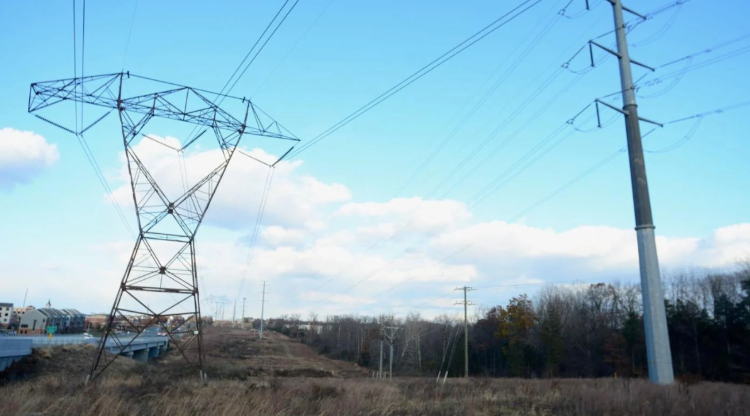
OAKLAND — With recent legislative developments and increasing activity from utility and energy companies, local landowners are advised to proceed carefully when approached to sign land easement agreements.
Specifically related to utility transmission line easements, an agreement typically grants companies permanent access and use of private land for infrastructure like towers, substations, and access roads. These agreements often come with long-term or perpetual rights and may significantly impact land use, farming operations, property value, and future development.
What's Happening In Garrett County-Garrett County Chamber Of Commerce
|

|
|
|
|

|
|
|


|
|


|
|
|
|
|
|
|
|
|

|
|
|
|
|
|
|
|
|
|
|
|
|
|
|
|
What's Happening In Garrett County-Garrett County Chamber Of Commerce
|


|

|
|

|
|

|
|

|
|

|
|

|
|

|
|

|